The rear axle joins before the slip
Ford describes Bronco Sport 4x4 as proactive. It watches driver demand and vehicle motion, then can transfer torque rearward before wheelspin begins.
Ford calls the system 4x4; plenty of crossover shoppers call it AWD. The useful distinction is simpler: every 2026 Bronco Sport can move power to the rear before the front tires spin, while the available twin-clutch system can also choose a rear wheel. Here is what that means on wet Rogue Valley pavement, packed snow, and the road to Mt. Ashland.
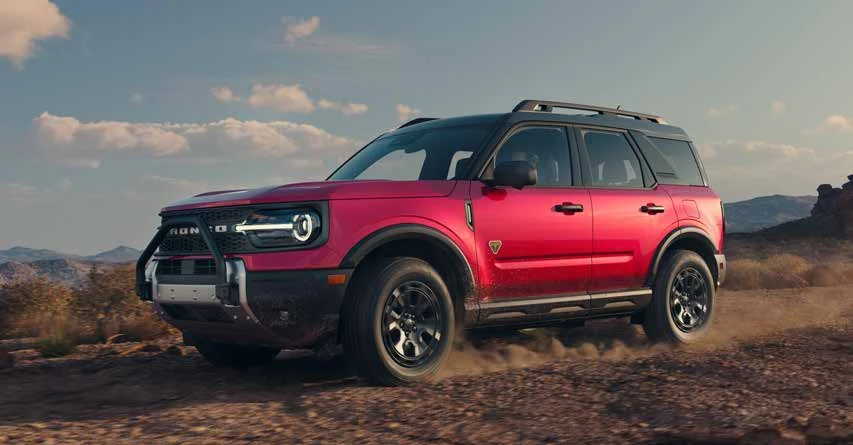
Ford describes Bronco Sport 4x4 as proactive. It watches driver demand and vehicle motion, then can transfer torque rearward before wheelspin begins.
The advanced rear drive unit controls the left and right rear wheels independently and can route virtually all available rear-axle torque to either side.
Slippery mode softens accelerator response and revises shifting for a firm surface covered by snow or ice. Rally is for deep snow off pavement—not an icy paved ski road.
Start with where the vehicle will spend its winter. The standard system already responds automatically on changing pavement. Advanced 4x4 earns its cost when loose terrain, deeper snow, or a lifted wheel is part of the plan.
| Compare | Standard 4x4 | Advanced 4x4 on Badlands |
|---|---|---|
| What it manages | Continuously varies front-to-rear torque and can act before wheel slip | Adds a twin-clutch rear drive unit that also manages the two rear wheels independently |
| 2026 engine | 1.5L EcoBoost: Ford-published 180 hp and 200 lb-ft | 2.0L EcoBoost: Ford-published 250 hp and 280 lb-ft |
| G.O.A.T. Modes | Five: Normal, Eco, Sport, Slippery, and Off-Road | Seven: the same five, plus Rock Crawl and Rally |
| Best winter case | Rain, cold pavement, packed snow, and a plowed ski-area access road with the right tires | The same road use, plus loose trail surfaces, deep snow, and situations where one rear tire has the useful grip |
| Important limit | The system cannot create tire grip or shorten an icy stop | The lock and aggressive modes are not for dry pavement; sustained wheelspin can still overheat the system |
For commuting around Ashland or Medford and driving a maintained ski road, the standard system already brings the rear axle in automatically. Put the money and attention into tires with genuine winter capability before buying rear-axle hardware you may rarely call upon.
Tradeoff: It does not have the Badlands twin-clutch rear drive unit, rear lock control, Rock Crawl, or Rally mode.
See current Bronco Sport inventoryChoose Badlands when a rutted forest road, uneven trail, or deep loose snow is a real part of the use—not because seven modes sounds better than five. The independently controlled rear clutches are the meaningful difference.
Tradeoff: More off-road hardware and a stronger engine do not replace winter tires, chains when required, or a conservative speed on ice.
Check for Bronco Sport BadlandsFord also lists a twin-clutch rear drive unit with the available 2026 Sasquatch Outer Banks Package. Equipment changes by trim, package, and model year, so use the window sticker—not the paint or wheel design—to identify the system on a specific Bronco Sport.
Bronco Sport does not ask the driver to shift a truck-style transfer case from 2H into 4H. Its transverse engine and eight-speed automatic drive the front transaxle, while a power transfer unit provides the path through a driveshaft to the rear drive unit. An electronically managed clutch determines how strongly the rear axle participates. The process is automatic, which is why the system behaves like what most crossover shoppers mean by all-wheel drive even though Ford badges it 4x4.
The 2026 Owner’s Manual calls the system proactive. It uses vehicle information and driver demand to anticipate a loss of grip and send torque rearward before a tire actually spins. Even with no obvious slip, it keeps adjusting distribution to help straight-line and cornering behavior. A graphic in the instrument cluster lets the driver see the current front-to-rear power distribution rather than taking the system on faith.
There are two useful limits to understand. If the system detects a fault, it can default to front-wheel drive. Long periods of high load or excessive wheelspin—deep sand is Ford’s example—can also build clutch heat and temporarily disable 4x4 until it cools. That is protection, not a low-range substitute. A Bronco Sport is clever about sharing traction; it is not hiding a two-speed transfer case under the floor.
The advanced system adds two clutch packs inside the rear drive unit, one controlling each rear wheel. That changes the question from “how much goes rearward?” to “how much goes rearward, and to which side?” Ford says the unit can divert virtually all torque available at the rear axle to either rear wheel. In a severe traction example, one rear wheel can propel the vehicle even when the other three have no grip.
The wording matters. Ford is describing the torque that has reached the rear axle, not promising that every pound-foot produced by the engine appears at one tire. Available grip, clutch temperature, stability control, gearing, and driver input still set the outcome. On a cross-axle rut or an uneven patch of deep snow, however, the twin-clutch unit has a tool the standard rear drive unit does not: it can favor the rear tire standing on the better surface.
Badlands also provides a rear differential lock function. Ford describes the locked state as turning both rear wheels at the same speed with equal torque. That can help in fresh mud or deep snow, but it is deliberately a loose-surface tool. Binding the rear driveline on dry, high-grip pavement creates stress and tire scrub, so the lock and the modes that call for it should stay off when the road is merely cold and clear.
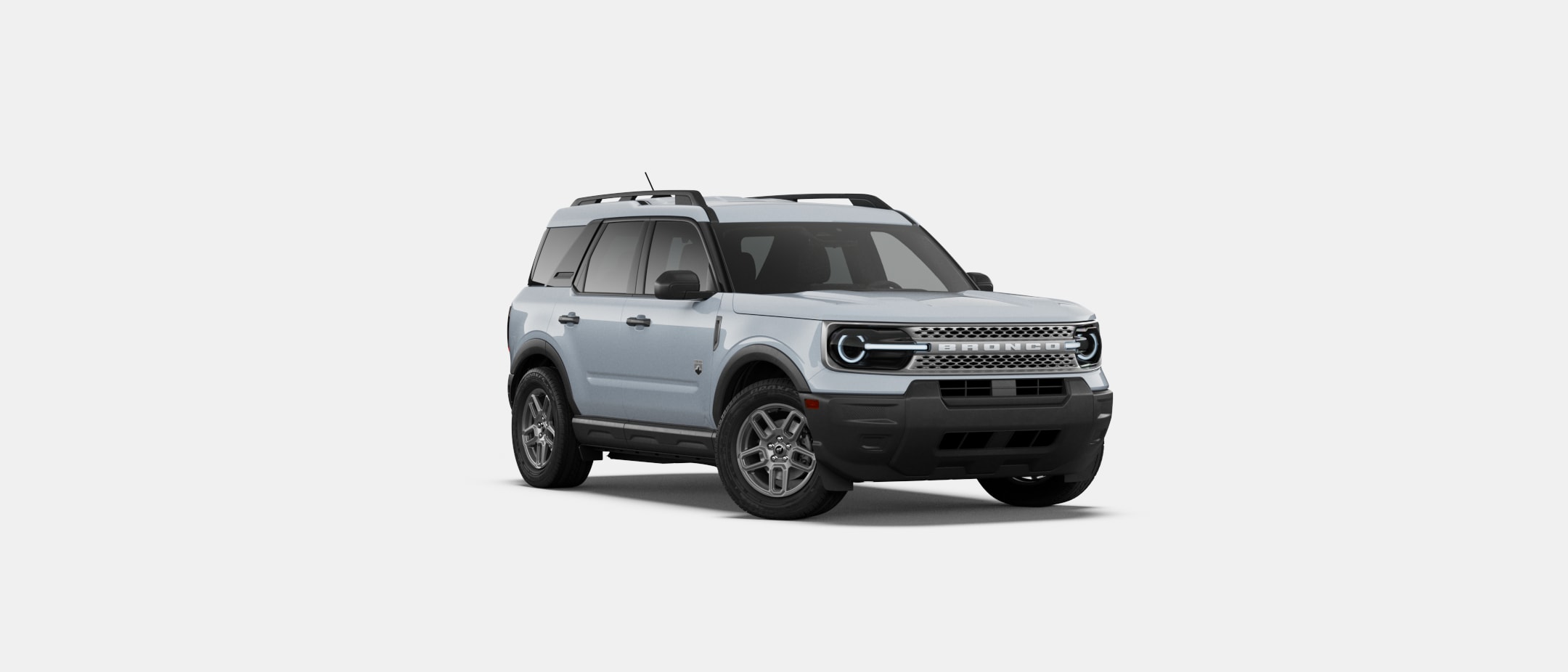
A G.O.A.T. Mode is not a set of extra gears. The Terrain Management System coordinates software-controlled responses: accelerator mapping, transmission shift behavior, steering feel, front-to-rear torque, stability control, and—when the hardware is present—the rear clutches and lock. Changing the dial gives those systems a shared instruction about the surface under the tires.
Mt. Ashland Ski Area puts a tidy number on a very real winter drive: from I-5 Exit 6, the paved access road runs 8.5 miles and climbs more than 2,000 vertical feet to the parking lot. Weather can change over that short distance. Wet pavement near the interstate can become packed snow higher on the mountain, with shade preserving ice after an open stretch looks clear.
That is where proactive front-to-rear torque and Slippery mode make sense together. The driveline can prepare the rear axle as load changes on the climb, while the softer pedal map makes it easier to request a small, clean amount of torque. On the descent, the same restraint matters more than acceleration. Select a sensible lower gear when needed, leave room, and make every steering and brake input early and gradual.
Rally mode is not the “more snow” setting for this paved road. Ford reserves it for deep snow or soft sand and warns that it can bind and wear the driveline on firm surfaces. If the access road is plowed, packed, or icy, Slippery is the correct match. If conditions exceed the tires, visibility, chain requirements, or the driver’s margin, the right mode is to turn around.
Four driven wheels can improve the ability to pull away and keep moving uphill. They do not give the Bronco Sport four extra brakes. Every vehicle already brakes at all four wheels, and stopping or turning on ice is limited mainly by the tires and available friction. An all-terrain tread is not automatically a winter tire; look for the three-peak mountain snowflake symbol when severe-snow performance is part of the plan.
Oregon chain requirements still apply to 4x4 vehicles. ODOT says traction tires may be allowed in place of chains for many passenger vehicles in typical winter conditions, but a conditional closure can require chains on every vehicle. That happens in Southern Oregon, including I-5 through Siskiyou Pass. Carry devices that fit the exact tire size, read the Bronco Sport Owner’s Manual for approved placement and clearance, and practice before a dark roadside chain-up.
Do not try to prove 4x4 capability by provoking wheelspin on a public road. Start in the parked vehicle. Turn the G.O.A.T. dial, watch the cluster explain each mode, find the power-distribution display, and ask which rear drive unit is installed. The window sticker should show Badlands, Advanced 4x4, the twin-clutch rear drive unit, or the package that adds it. Confirm the tires by reading their sidewalls rather than relying on a package name.
Then take a normal drive. Pay attention to the things that will occupy the other 95 percent of ownership: pedal response, shift quality, tire noise, ride over broken pavement, rear visibility, ski length with the seat folded, and roof-rack reach while wearing winter shoes. The stronger 2.0-liter and extra rear hardware are easy to admire. The better purchase is the one whose ordinary behavior and winter preparation fit the trips you will actually make.
Drivetrain and mode descriptions were checked against Ford’s current 2026 Bronco Sport materials on August 16, 2026. Mt. Ashland and Oregon sources supply the local access-road and winter-equipment context. The Owner’s Manual and labels for the exact vehicle remain controlling.
These answers reflect Butler Ford and the current shopping process. Call about the specific vehicle when you need availability or equipment confirmed.
Ford calls every 2026 Bronco Sport 4x4. In operation, the standard system behaves like a proactive crossover AWD system: it automatically varies torque between the front and rear axles and does not ask the driver to select 2H or 4H. It does not have the two-speed transfer case or 4L range found in the larger Bronco.
Use Slippery mode on a firm road covered by packed snow or ice. It lowers accelerator response and optimizes shifting for that surface. Badlands Rally mode is intended for soft dry sand or deep snow off pavement; Ford says it is not for a paved road covered by snow or ice.
Ford equips the 2026 Badlands with an advanced twin-clutch rear drive unit and a rear differential lock function. The two rear clutch packs can manage the rear wheels independently; when the lock is active, Ford describes the rear wheels as turning at the same speed with equal torque. It is a loose-surface feature, not one to use on dry pavement.
Yes, carry approved traction devices when signs or conditions require them. Oregon can require chains even on 4x4 vehicles during a conditional closure. Match the device to the exact tire size and follow the Bronco Sport Owner’s Manual for placement and clearance.
For a maintained paved access road, standard 4x4 with suitable winter tires is a sound starting point. Conditions can still exceed the vehicle or driver: Mt. Ashland recommends carrying chains, and current road, weather, and chain restrictions should decide whether the trip goes ahead.
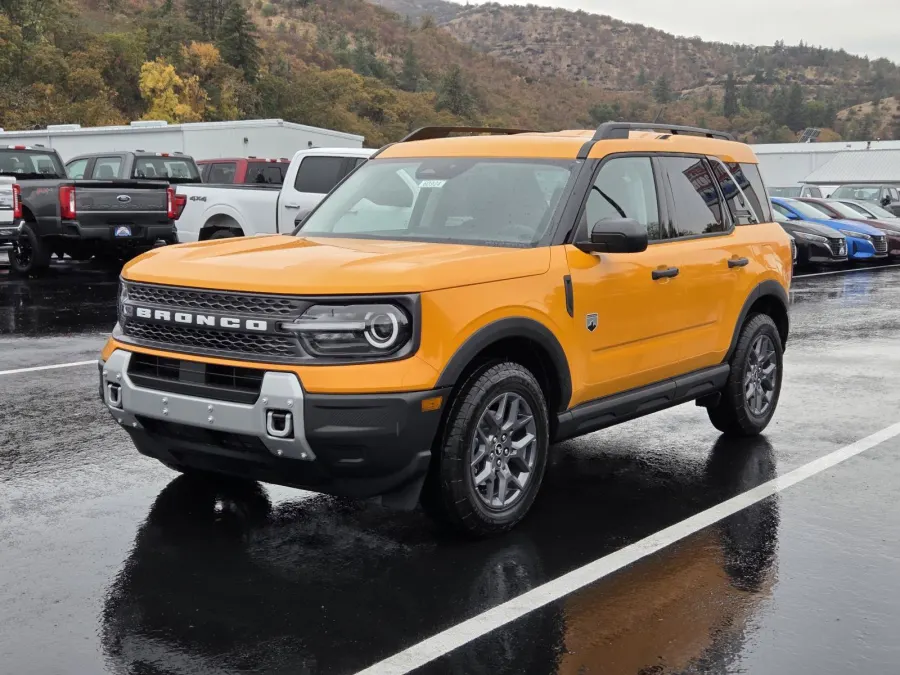
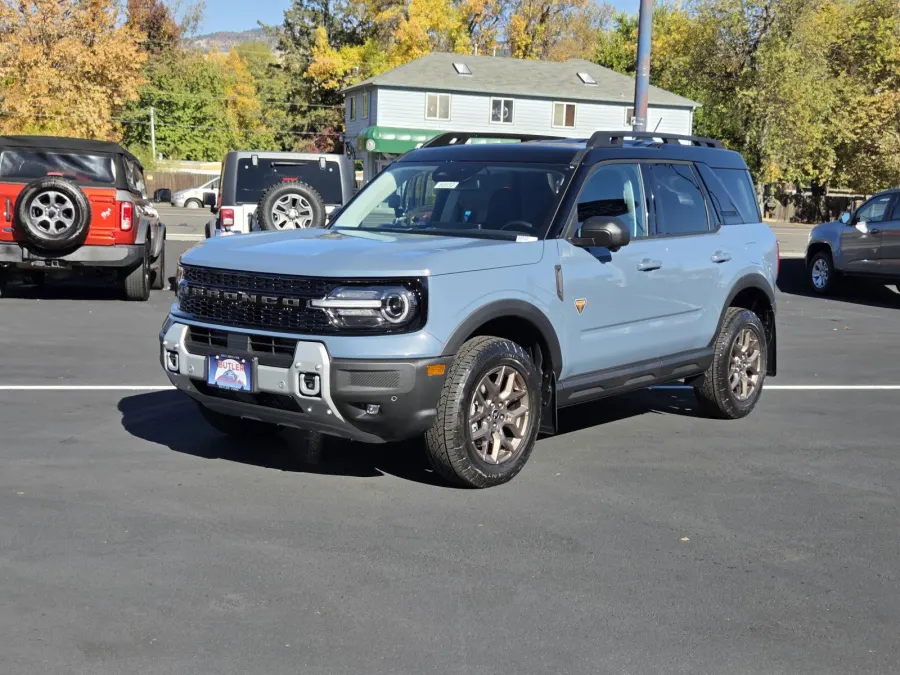
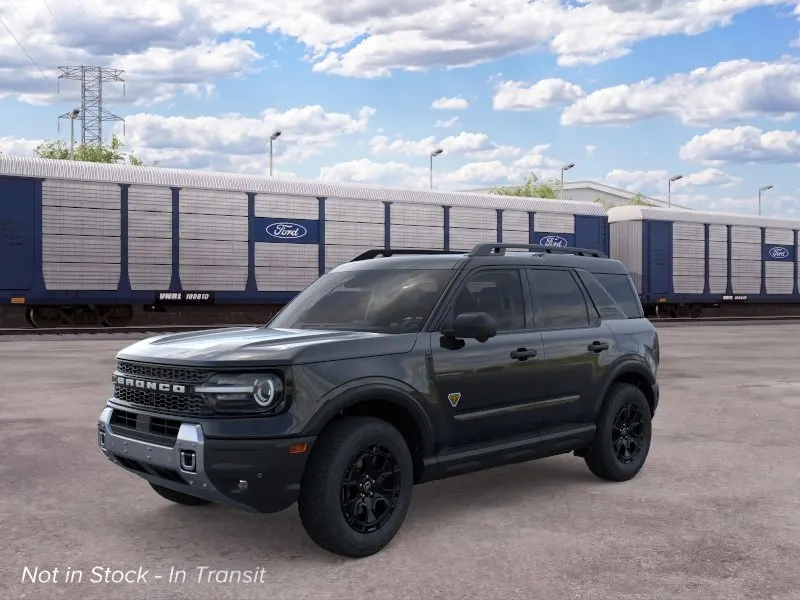
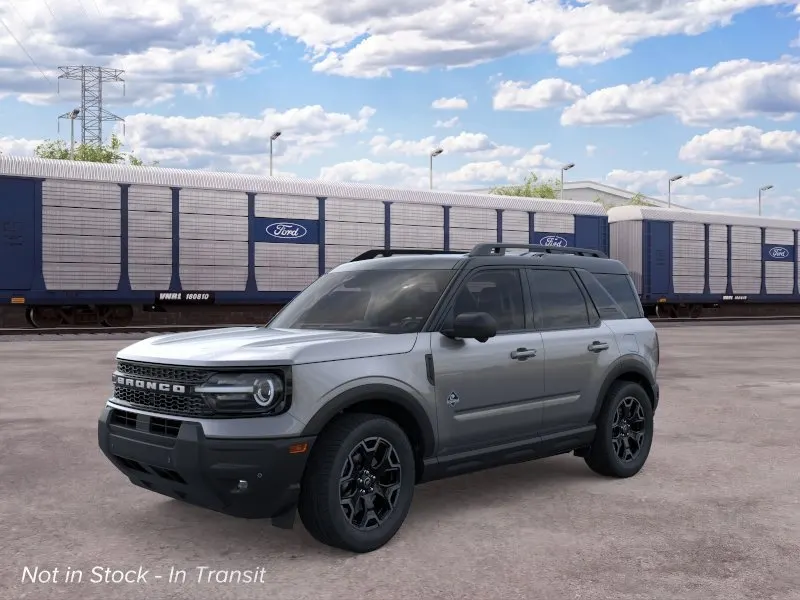
These live matches come from Butler Ford’s published inventory and are limited to new Bronco Sport models. If fewer than four appear, that is the current match count—not a reason to mix in other Ford SUVs. Open a vehicle to check its trim, window sticker, tires, and current pricing; ask us to confirm which rear drive unit is installed.
Big Bend
Common communities include:
Ashland · Talent · Phoenix · Medford · Jacksonville · Central Point · White City · Eagle Point · Gold Hill · Rogue River · Grants Pass · Shady Cove · Trail · Prospect · Cave Junction · Klamath Falls · Hornbrook · Yreka · Montague · Fort Jones · Weed · Mount Shasta Address and vehicle eligibility are confirmed by Butler Ford.Badlands
Common communities include:
Ashland · Talent · Phoenix · Medford · Jacksonville · Central Point · White City · Eagle Point · Gold Hill · Rogue River · Grants Pass · Shady Cove · Trail · Prospect · Cave Junction · Klamath Falls · Hornbrook · Yreka · Montague · Fort Jones · Weed · Mount Shasta Address and vehicle eligibility are confirmed by Butler Ford.Badlands
Common communities include:
Ashland · Talent · Phoenix · Medford · Jacksonville · Central Point · White City · Eagle Point · Gold Hill · Rogue River · Grants Pass · Shady Cove · Trail · Prospect · Cave Junction · Klamath Falls · Hornbrook · Yreka · Montague · Fort Jones · Weed · Mount Shasta Address and vehicle eligibility are confirmed by Butler Ford.Outer Banks
Common communities include:
Ashland · Talent · Phoenix · Medford · Jacksonville · Central Point · White City · Eagle Point · Gold Hill · Rogue River · Grants Pass · Shady Cove · Trail · Prospect · Cave Junction · Klamath Falls · Hornbrook · Yreka · Montague · Fort Jones · Weed · Mount Shasta Address and vehicle eligibility are confirmed by Butler Ford.Butler Ford can identify the 4x4 hardware on a specific Bronco Sport, show you the mode controls, and confirm current inventory before you come to Ashland. Road conditions and traction requirements still get the final word on ski morning.